Concerns about supporting monetary intervention yen and weighing on AUD/JPY

BY
Ben Graham
|

By using this site, you agree to our Terms of Use of Use and Privacy Policy
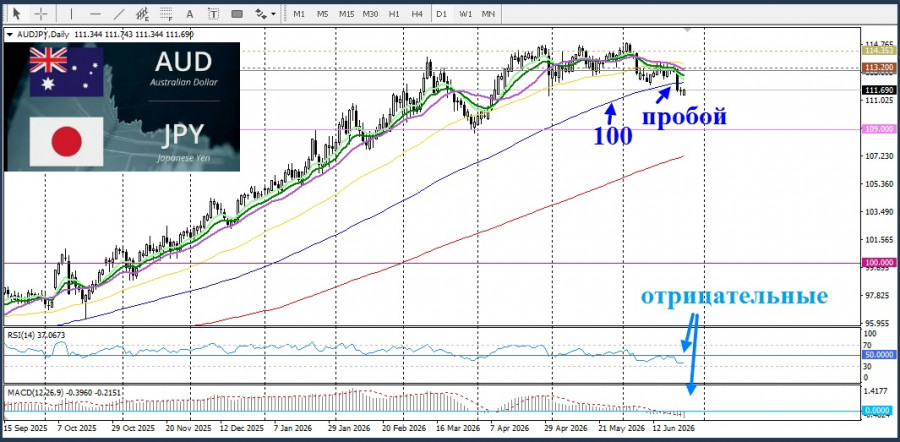
AUD/JPY has drawn sellers' interest after fresh Australian labor market data and is sliding toward the late-April low. Spot quotes are just below 111.69, down about 0.20% on the day; the pair looks vulnerable to a further pullback from the psychological 115.00 peak reached in 2007 and reaffirmed earlier this month.
The Australian Bureau of Statistics reported that the unemployment rate fell to 4.4% in May, in line with expectations, from 4.5% a month earlier. Additional data showed employment increased by 40,300, while the consensus had expected a rise of only 25,000. At the same time, employment for the previous month was revised down, showing a loss of 40,700 jobs. Those figures, together with mixed consumer inflation readings in Australia and cautious market sentiment, weaken the risk-sensitive Australian dollar and pressure AUD/JPY.
At the same time, amid growing speculation about potential joint currency intervention by the United States and Japan, the yen is receiving support, which is further weighing on the cross. In particular, Japan's finance minister Satsuki Katayama and US Treasury official Scott Bessent confirmed readiness to act on exchange rates as needed. In addition, Chief Cabinet Secretary Minoru Kihara said appropriate measures would be taken in response to currency volatility if required.
Those circumstances, combined with the Bank of Japan's hawkish tilt, are positive for the yen and contribute to AUD/JPY weakness. Minutes of the April BOJ meeting last week showed some board members advocated quicker rate increases to prevent excessive growth in core inflation. Moreover, a report on participants at the June meeting confirmed discussion of rising inflationary risks and calls for more prompt rate hikes to bring borrowing costs closer to neutral. BOJ board member Naoki Tamura also emphasized the importance of aligning the policy rate with a neutral level of about 2%.
Nevertheless, borrowing costs in Japan remain lower than elsewhere, including Australia. Markets continue to price expected RBA tightening of 15 basis points by year-end. That may deter traders from opening aggressive short positions in the AUD/JPY cross and limit further declines. A breakout of the 100-day simple moving average (SMA) this week—the first since June 2025—points to downside as the most likely direction for spot prices. Oscillators are negative, confirming bears' edge.